
Cheap hotels in Madrid: the best-value barrios
Madrid combines capital-city sights with prices closer to a provincial one, and the gap between the famous streets and the next barrio over is where the value is. This guide covers where to look and how to check the level for your own dates.
By The Hotella editors · Updated
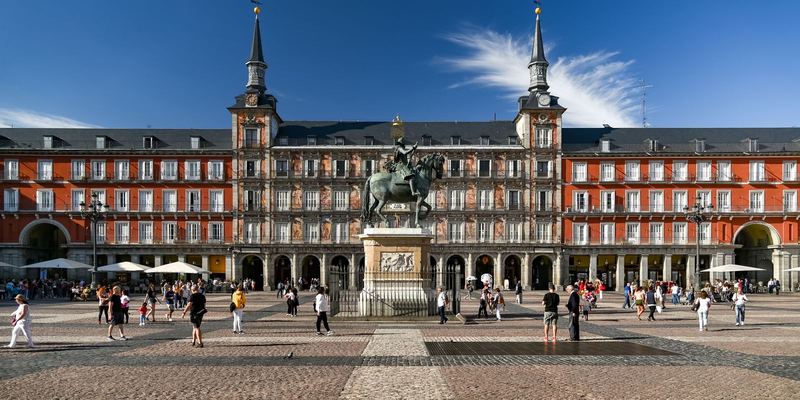
The best-value areas in Madrid are Lavapiés, the edges of Malasaña, Chamberí and the districts along the metro one or two stops out — Argüelles, Pacífico and Tetuán. Madrid is cheaper than most Western European capitals to begin with, and the metro makes the whole centre reachable in minutes, so staying one neighbourhood out saves real money without costing time.
Barrio by barrio, on a budget
Lavapiés is the cheapest central option: a working-class quarter ten minutes' walk from Sol, with low hotel prices and the city's most international food. The edges of Malasaña, away from Plaza del Dos de Mayo, offer the bar's nightlife at below-centre prices.
Chamberí is the quieter choice — a residential barrio of old apartment blocks and tapas streets, with good-value hotels around the metro stops. Tetuán, further north, and Pacífico, to the south-east, are where the same money buys a noticeably newer room.
Around Atocha station there is a practical cluster of affordable hotels that suits early trains and day trips to Toledo and Segovia, a short walk from the Prado.
What you trade away
Almost nothing in Madrid. The cheap barrios are central, lived-in and well served — this is not a city where budget means peripheral. What you give up is the famous street address and the rooftop bar, not access.
The one real caution is noise: the centre goes late, and a cheap room above a bar street is cheap for a reason. Recent reviews mention noise reliably.

When Madrid is cheapest
August is the deep-value month, when the city empties and prices fall. January and February are the winter low, with cold, bright days and short museum queues.
High season is spring and autumn — Easter week, the autumn trade fairs and big football weekends are the dates where the whole city moves up at once.
Check the level for your own dates
The live price box on this page shows a current total for real dates in Madrid, fetched when you load the page.
Then run your own dates and compare the centre against one barrio out — in Madrid the saving is usually immediate and the commute is a walk.

Step by step
1. Stay one barrio out
The premium is paid on Sol, Gran Vía and the streets by the Prado. One metro stop in any direction the prices fall, and the centre is still walking distance.
2. Start with Lavapiés and Chamberí
Lavapiés, just south of Sol, is the classic budget quarter — multicultural, lively and cheap. Chamberí, north of the centre, is a residential barrio with good-value hotels and some of the city's best tapas streets.
3. Follow the metro lines out
Argüelles, Pacífico, Tetuán and the areas around Atocha station all have solid, cheaper hotels with the centre under fifteen minutes away. Madrid's metro is dense and runs late.
4. Use August if you can take the heat
Madrid empties in August as residents leave, and hotel prices fall with the demand. The trade-off is serious heat and some closed restaurants; the museums stay open and uncrowded.
5. Compare the total for the stay
Rates are quoted with and without breakfast, and some rates exclude taxes until the final step. Compare totals for your exact dates, which is what the prices on this site show.
6. Check for big weekends
Champions League home matches, the Mad Cool festival, Pride and the major trade fairs lift the city at once. A quick search of the week before and after your dates shows whether you have landed on one.
Frequently asked questions
- What is the cheapest area to stay in Madrid?
- Lavapiés is the cheapest central barrio, ten minutes' walk from Sol. Tetuán and Pacífico, a few metro stops out, are cheaper again and noticeably more modern.
- Is Madrid cheap for hotels compared with other capitals?
- Yes — Madrid is consistently cheaper than Paris, London, Amsterdam or Rome for the same standard of room, which is why the value strategy here is about choosing a barrio rather than compromising on quality.
- Is August a good time to visit Madrid?
- For prices, yes — the city empties and hotels drop their rates. The trade-off is heat above 35 degrees most days and some closed local restaurants, though the museums and big sights stay open.
- Do Madrid hotels add a tourist tax?
- Madrid does not currently charge a city tourist tax, which keeps the total close to the quoted rate. Breakfast, however, is usually extra.
- Is it noisy to stay in the centre?
- It can be — Madrid's nightlife runs late and the narrow streets carry sound. A room on a quiet side street, or one barrio out in Chamberí, solves it without moving you far.